At the Edge of Humanity: What I Witnessed in Greece

Rob and colleagues,

Over the past two weeks, I was in Greece, visiting our partner organizations that offer the last glimpses of humanity in a world that, for people on the run, is no longer humane.

Because no, Rob, this is not about a single incident where something goes wrong. Human rights are being violated systematically. A sentence in a policy document stating that this should not happen does not mean that it does not happen. Because it does happen. And on a large scale.

I have seen a great deal of suffering in my life across this world. What makes this different is that I am a citizen of a country that supports this suffering. That considers it acceptable.

I would very much like to take you along on my next trip. We would talk to the boy who had to flee his country, who endured a hellish journey filled with horrific experiences, who crossed the sea. Upon arrival, the Greek coast guard tried to push the boat back into the sea (this happens on a very large scale; there is overwhelming evidence—could you address Greece about this?). The boy held up a baby who was also on the boat and said: Don’t do it! They did not, but they arrested him and claimed he was a smuggler. He is not. Thousands of people in Greece are imprisoned on charges of human smuggling when they are not smugglers at all (could you also address the Greek government about this?).

We would also try to speak with the people who, just the night before last, were taken from their beds in one of the camps on the islands by the police and arrested. Their application had been rejected for the second time. They can now be detained for two years, even though their legal term had not yet expired.

And we would visit the organizations working on mental health. Because 50% of the people who come there have suicidal thoughts. After experiencing terrible things, then not being welcomed, being placed in a filthy camp, and then waiting—there is a limit to what people can endure.

I could tire you with an essay about the legal, constitutional, and factual errors that dominate the debate on migration. About numbers that are incorrect, but above all about the ongoing lies used to justify inhumane measures.

I will not do that. I appeal to your humanity. Things are happening at the edges of Europe that cannot bear the light of day. Children arriving on the shores of Greece are sent back out to sea naked in rubber boats. Masked men push boats back or let them sink. With impunity.

Saying that human rights must be respected while holding no one accountable, dismissing kilometers of evidence—I cannot and do not want to understand it. Once, we were a country that held human rights in high regard, that stood up for them internationally. Now we are participating in a European contest to see who can create the harshest asylum policy.

Come with us sometime and listen.

Rob Jetten

dwarsliggers

Even the mavericks were left speechless…

Elise Kant, director of Haella, came to visit.

Outspoken and passionate, a real hands-on type.

During a sabbatical on Lesbos, she witnessed a new vitality among young volunteers that gave her courage. As far as she’s concerned, the widely used Theory of Change in philanthropy belongs in the trash—because failure should be allowed in project funding.

She doesn’t need the government for her plans. In fact, when officials tried to ride the wave of success of the small poverty relief fund, she told them to take a hike.

She was named the most influential professional in Dutch philanthropy.

Listen and find out why…

https://app.springcast.fm/20328/22-elise-kant

op lesbos

Living and Waiting in the Camp on Lesbos

The first time I was on Lesbos, in April last year, I was constantly aware of the camp, the injustice, the problems—no matter where I was on the island.

It felt deeply unsettling and sad—an issue of global proportions, hidden away at the edge of an island. A nagging feeling: am I allowed to enjoy myself here, even outside the camp? Should I even be here, or am I engaging in some kind of disaster tourism?

Walking through the camp was, above all, a confrontation with my own powerlessness and anger.

When you stay somewhere longer, your perspective starts to shift. The feelings of powerlessness and anger remain, and at times, they are sharp and confronting. But at the same time, the camp begins to feel more like a microcosm, with its own rhythm and its different groups of people. A growing number of familiar faces. The people from Fenix, the translators, the residents of the camp—some of whom come by every day with their questions, concerns, or simply for a chat. You start to learn names, you hope for good outcomes. What once felt massive and abstract turns into the reality of people with names and faces.

The Syrians who are stuck in limbo because all procedures for Syrians have been suspended. The unaccompanied minors whose asylum process is complex. The people endlessly waiting for a decision—and after that, for travel documents—longing to leave. And that one man, shivering in only his sweater, while the icy wind still blows.

By 9 a.m., when we arrive, he is already there with his little daughter. He has received another email: more waiting. If he hears nothing in the next 15 days, he must email again. He is heartbroken.

But then, just before we leave, Aron’s phone rings. The decision is in—it’s positive! The entire family has been approved.

Now begins the wait for papers and travel documents. Without those, they cannot even leave the island. And then what? But for now, everyone is happy. The first hurdle has been cleared.

The camp—like all camps—remains a disgrace. The brutal winds of hatred are still terrifying. And I wonder, deeply, what I, what we, can do to turn the tide.

The answer, I believe, lies somewhere in the stories of these people. Giving them faces, giving them names. The only question is: how?
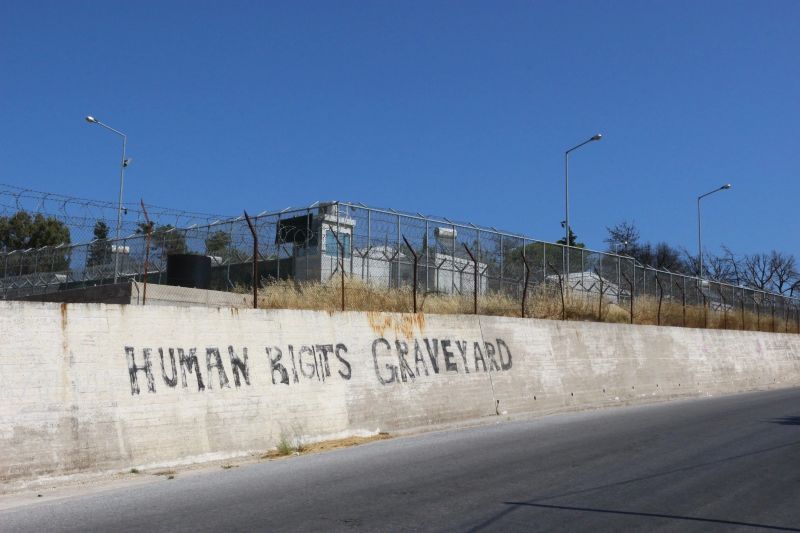
wall lesbos
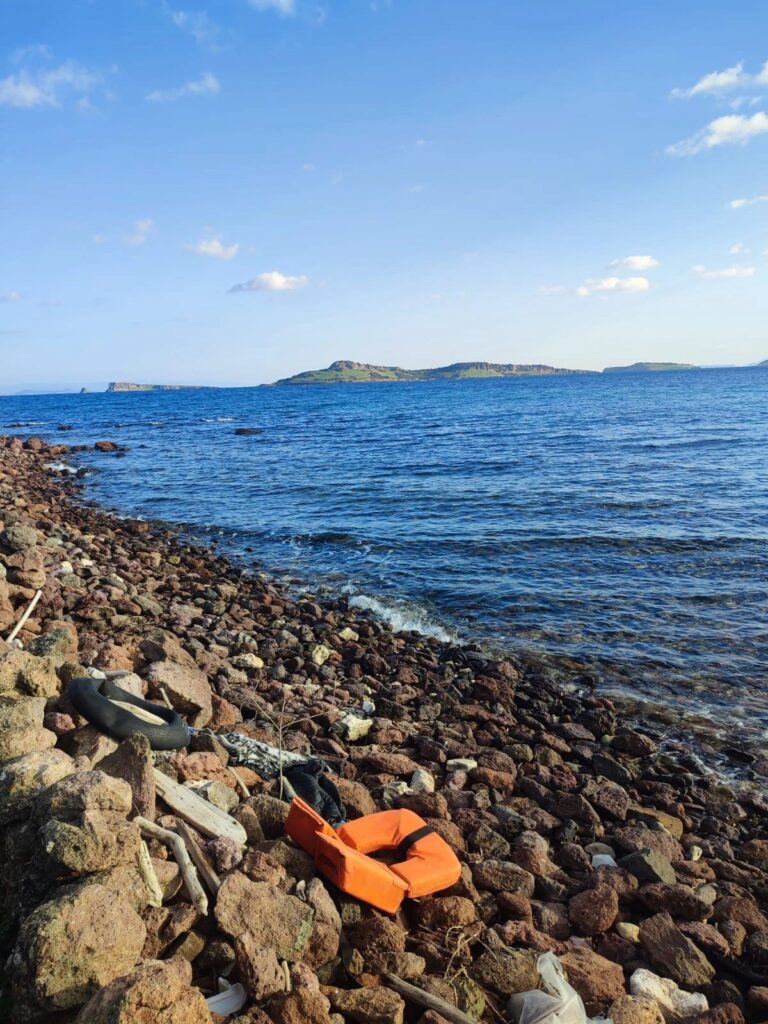
beach lesbos
questions

Preserving Humanity in a Dehumanizing World

These words come from asylum interviews with people who have arrived on Lesbos. Reality, as it turns out, is often far harsher than we can imagine.

The same applies to today’s news about the possible dissolution of USAID. Beyond the catastrophe this would be for countless organizations worldwide, it is also a deeply alarming signal. The drumbeat of dehumanization grows louder for those who do not fit into a privileged framework. It chills me to the bone—even here, under the generous spring sun shining over the island.

You could become cynical, or deeply saddened. Or you could look at the people who, against all odds, are trying to make a difference. The courageous team at Fenix, the many small initiatives in the Netherlands supporting those who fall through every crack, our partners in Uganda, and others around the world.

Now more than ever, it is both good and necessary to recognize and feel that there is a broad movement saying no to these voices, to these ways of treating one another.

And that each of us can do something to stop this tide. No matter how small—it matters. Whether you donate, speak up even when it feels daunting, or do something for another person, even a stranger—it all counts. And it is more necessary than ever.