despair

What to do in the face of despair?

Since I returned from Lesbos, I’ve spoken with many people and addressed various gatherings. I find it important — and meaningful — to share stories and reflect on what I’ve seen.

What I often encounter is a deep sense of despair and sadness in people about what’s happening. Whether I speak about the hellish conditions at the edges of Europe or small projects here in the Netherlands, the reaction is often: I didn’t know. Not that this is going on. Not how serious the problems are. But also not how many people care — and take action.

It’s like practicing the art of not becoming disheartened. Because despair leads to helplessness, which leads to apathy.

Where do you find hope, and what should we do to hold onto it?

I get asked this more and more, and the question seems to become more urgent each week.

There’s no standard answer.

But there are things I’ve learned that help:

  1. Look at what is happening. At all the people who are taking action. Wherever, however. There really are so many!
  2. Contribute financially to initiatives where there is immediate need. Now is the time. Donate to the last remaining community centers in Gaza, support organizations that strive to preserve humanity in the hell at Europe’s borders, back that tiny neighborhood initiative helping people no one sees. And trust them.
  3. Don’t drown in the big-picture, systemic issues that seem impossible to solve. That can make you feel powerless. Instead, look at now — there is something you can do today, even if it’s small. And small steps are always more than nothing.
  4. Stay informed. Even if the news overwhelms you. Even if it’s just on one topic close to your heart.
  5. Join those already doing something. That feels far less lonely. So many people have already started — help is needed everywhere. Even if you have little time, there’s always something you can contribute.
  6. Sign petitions. March. Join the Red Line in The Hague tomorrow and Straat op! in Amsterdam next week. It may not change the world overnight — but it will change your sense of hope and courage. You are not alone, and we show the world that we do care. Moral support can sometimes be more powerful than financial. People from Haella will be at both protests — don’t want to walk alone? Let us know, and we’ll create a meeting point.
  7. Take care of each other — and yourself. Share your grief and frustration, and share your hope. Again and again. You are not alone. Truly.
travelling for haella

Trust as a Starting and Ending Point

Trust as a Starting and Ending Point

The two most common questions or remarks I get when I travel to visit partners and projects are these: Are you going there to evaluate or monitor them? and Oh, how brave — isn’t it incredibly hard to travel through those countries and witness all that suffering?

The answers are: no, no, and yes.

Haella is built on one solid foundation: trust. I don’t need a theory of change or a five-year plan. I actually dislike the word impact, or worse, impact indicator. I believe in people who see a problem, observe it closely, and then take action. And in situations like those here at the borders (and elsewhere), you shouldn’t burden people with requests for detailed plans or only give money for activity X or Y. The situation literally changes every day. So what do we do? We simply give money because we believe in what people do. What we do here is mostly observe, listen, ask questions, and talk to a wide range of people — and then zoom out to ask: what does this mean for Haella? What more can we do to fill the gaps, to tell the world what’s happening here, and to support the people working in these organizations? A project doesn’t improve because I ask for long reports. On the contrary — bureaucracy has crushed many good plans. We truly try to be a partner. Trust is our starting point, and our end point.

Traveling isn’t hard — as long as you’re prepared for things to never go as planned. We’ve been stuck in a violent storm for days now. We were supposed to take the boat to Chios and then to Samos, but it was taken out of service. So we flew to Samos instead, which turned out to be quite a terrifying experience — landing in a storm with strong crosswinds… let’s just say it wasn’t exactly a soft landing. Lianne and I held on to each other for a moment.

Seeing suffering — that always hits you. Especially this kind, on the edges of Europe. It doesn’t have to be this way — no, it shouldn’t be this way — in fact, it must not be this way. And yet, it is. It’s a journey along barbed wire, police, military zones, and meetings with people in organizations who are incredibly brave — and sometimes just exhausted. They bring hope, but they often have to pull it up from the depths of their souls. We speak with people who have endured so much, who carry heavy sorrow behind their smiles. That means listening, feeling deeply, sometimes crying, and then moving forward with even more conviction. And knowing: there’s a huge group of people out there who really care. We want to stand with them. We want to support them. And we want to show the world that this is truly unacceptable — and that things can be different. In the end, it’s actually just that simple.

And would you like to join us?

You are more than welcome.

Luiza-Vinhal-Lily-Davies

I wish I could write a hopeful story

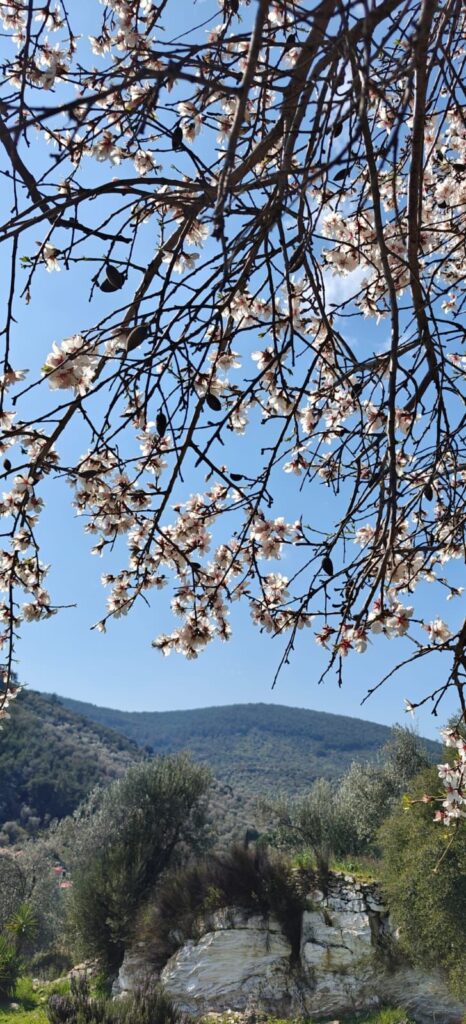
I wish I could write a hopeful story. One that lifts you up. That you can hold on to when you’re struggling to see how this world could possibly move forward. A story to read in the spring sun, surrounded by the first blooming trees.

I wish I could say: it will be okay. That one day, we will truly understand how much we need each other. That there is more than enough space for everyone. That it is beautiful and enriching to meet people who, at first glance, seem nothing like us—until we realize how untrue that is. That, at our core, we are the same.

I wish so much that the angry men making decisions—decisions that are, let’s say it out loud, criminal, evil—would disappear. Because whatever they say or do, it only destroys, shatters, is unacceptable.

I wish so much that no one would ever have to flee, for any reason. And if they must, that they would be welcomed when they arrive. Welcomed, given rest after their dangerous journey. Not, as happens now, forced into a filthy, overcrowded container—heavily pregnant, with children, a husband, another family with a baby.

I wish so much that people would care. That they would care about what is happening.

I wish so much that we would not only express opinions, write, and speak up—but that we would act.

Because if we take action en masse, if we say: this cannot, must not continue like this—

Then, we keep hope alive.

If we look at the people who are already taking action, whether here, on Lesbos, in the Netherlands, or anywhere else, and then ask ourselves: Hey, what can I do?

Then, yes, then we have a hopeful story. Because that is where it begins. That is the foundation. In that one question: What can I do? And then doing it. Alone or together. Sometimes with the desperation of last resort. But still.

That is where something begins.

Among the blooming trees in the spring sun.

with Luiza Vinhal,Lily Davies
spring