migration roundtable

We so desperately need these stories from the field!

Eight representatives from embassies, the EU, UNHCR, and IOM listened to the experiences of 23 small grassroots NGOs from across Greece, all working in support of refugees. It was a unique gathering, because small NGOs rarely have much access to embassies, and embassy representatives almost never get the chance to speak with so many NGOs at once who are truly working on the ground.

“We are the ones taking the risks to fill the enormous gaps left by Greece and the EU,” one of the NGOs said. And those risks have grown significantly in recent years. Calls for criminalisation are increasing, and so is the legislation that enables it.

A bitter example of this is the so-called “boat trials.” When a boat arrives, the police look for the person who was steering it. That person is arrested and accused of human smuggling. But human smugglers are not on those boats. After the arrest, an extremely brief trial follows. Thousands of people are unjustly imprisoned in Greek prisons.

We were guests at the residence of the Dutch Ambassador to Greece. It was very special to be able to meet there, and that representatives from other embassies had also been invited. And it was one of those days when something happens that you cannot plan or orchestrate, yet that is exactly what makes it so extraordinary.

In addition to the danger of criminalisation, these NGOs are dealing with declining income, suddenly losing access to the camps where they work, and struggling with what they can still do or say without putting people or their organisations at risk.

As the day unfolded, the atmosphere began to change. The initial tension faded. People started sharing openly and honestly, while also contributing to the report we are preparing for embassies and others on the effects of this legislation. As the stories began to connect, a picture emerged that was heartbreaking, infuriating, and deeply sad. But also inspiring: these people are doing it. They are doing what truly matters, despite fear, despite danger.

Two worlds met. Two worlds trying to position themselves within a discourse that speaks of human rights, while holding on to those rights often proves to be an illusion. Two worlds that did not know each other before, yet where something like solidarity began to emerge. “Next year at the French Embassy,” I joked to a French diplomat. “That sounds like a good plan,” he replied.

“I was very sceptical about this day,” one of the participants said, “but that turned out to be completely unjustified.” “I hope you realise the enormous impact you have created with this day,” another wrote.

I find it impossible to capture the richness of this day in a short piece. That will be done more fully in the report we are finalising this week.

With heartfelt thanks to the Dutch Ambassador in Athens and to Cees Van Beek, First Secretary. A day in which people meet, share strategies and experiences, and above all feel seen, is of immeasurable value in helping them keep going.

refugees calais

AU

“Every year more people drown while crossing the Channel. In 2024, as many as in the previous six years combined.”

We are in Calais. A city with 76,000 inhabitants and 1,200 police officers. A city where every 48 hours, an insane police force destroys the places where people sleep.

That’s bullying. Malicious harassment. Dehumanizing. Get lost, go away.

A city where everyone without papers is homeless. A city where people lose hope.

In the late afternoon, we’re standing on a large field. There’s a game of football going on. Two boys sit by the water tank — just refilled by the organization we’re here with — washing their shoes. Two other boys are watching the game. Aron kicks a ball around with Gabriel. He’s so young it hurts. On the field stands a huge trailer, inside are tents where 400 people sleep.

Laundry flutters on the barbed wire. A bitter image of hope and despair in one.

Everything you see here is a layered reality. Seeing things, knowing what you’re not seeing, and sensing — when you place yourself in the shoes of that boy whose eyes light up when he plays football with a ball that’s far too soft — feelings you don’t want to feel, too much heard, seen, experienced. So young, younger than my own boys.

It’s strange — walking around in this madness during the day, that’s doable. But then, in the evening, back in the hotel room, the awareness sinks in of what I’ve actually seen. And I think about 95 amoral MPs and 1,200 police officers who destroy things pointlessly, and these boys — who are just human, like you and me — but here are condemned to live among the trash, to be welcome nowhere.

Imagine what that must feel like.

The world is broken. I can’t put it any other way.

If everywhere, all we can come up with is beating people away, stabbing boats (yes, that happens here too — in shallow water, it’s even allowed), destroying their belongings every 48 hours with brute force — it’s inhumane. And it’s only getting worse.

Normally, I would now begin a tribute to the organizations here. And they absolutely deserve it, because what courage and grit it takes to keep providing people here with water, food, electricity, clothes — because otherwise they simply wouldn’t have it.

But today, disgusting Dutch legislation runs parallel to a disgusting French reality. And that is unspeakably heartbreaking.

It is unacceptable.

Period.

Lianne Engelkes Manou Zonderland 🌎🌍🌏 Aron Bosman Dirk Kome Bart Driessen Haella Stichting Fred Foundation

samos

Storm on Samos

Maybe it’s a good thing that it never becomes normal—the things that simply shouldn’t be, that leave a knot in your stomach and sadness in your mind. Because they force us to search for solutions.

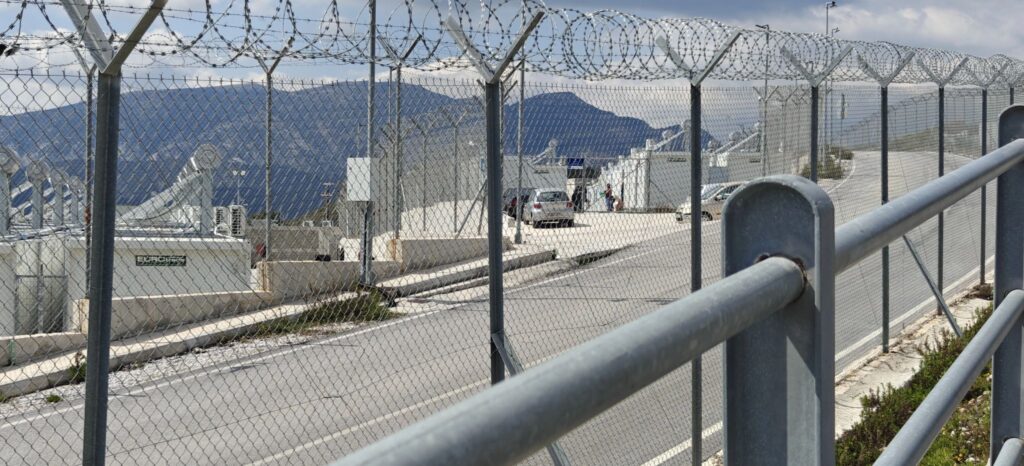
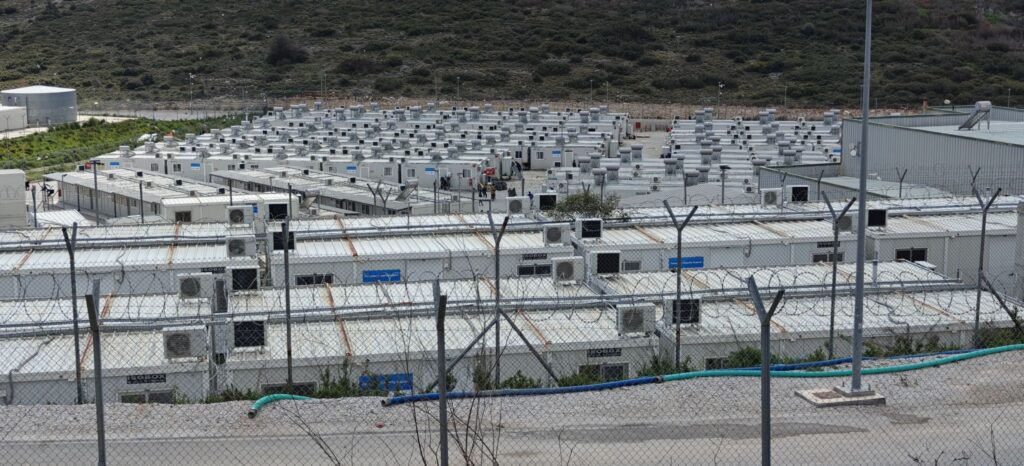
A strong storm is raging over Samos. The island is rougher than Lesbos, with fewer inhabitants. Yet, there is a growing number of people on their way to a (dream of a) future. A large camp, a 1.5-hour walk from the city, that truly looks like a prison. Especially for the many children, it is a distressing place. Garbage is everywhere, the containers where people live have no locks, the camp was built in a location with severe water issues, there is no lighting at the sanitation facilities, no proper washing facilities, and police violence. The latter is present in all camps, but out of fear, people rarely talk about it.

We are not allowed inside. There are few NGOs here, and the ones we visit do not have access. People are allowed to leave the camp, but that means long lines and strict controls.

The camp was originally located on a hill near the city. This caused much discontent among the local population, especially in regard to tourism. A few years ago, it was relocated. The new camp was initially intended for 2,400 people, but suddenly it was designated for 3,600, and it frequently holds even more. Despite these large numbers, few aid organizations are active here. They cannot enter the camp, and all organizations struggle with funding, making expansion difficult.

That help is needed is beyond question. We speak with a legal organization that supports people during and after their asylum procedures, as well as an organization that provides a much-needed escape from the camp’s atmosphere. A community center where people can learn English, where children can play, and where women have a space of their own. “People need a place to relax, to step away from that prison-like environment,” says Dalia from Samos Volunteers, who built Alfa Land right across from the camp. Cheerful, colorful, and even on this extremely windy day, a place where people come to feel human again.

The greatest unmet need is mental health care. The number of people who have been trafficked, raped, or otherwise tortured is high. On Lesbos, there is some attention to this, for example through BRF, but here, hardly any. This is due to the lack of attention from the Greek government and, as mentioned, the low number of NGOs.

Lianne and I feel deeply saddened. There is no other way to put it. Treating people like this—it simply makes no sense. The storm that has been raging across the island for days only adds to the heaviness.

But even now, it is the people who, against all odds, continue to do what is absolutely necessary, who share their plans, hopes, and despair with us, who persist with an inexhaustible drive to do what must be done—they set the example.

And I keep thinking about how to find funding for these organizations. Because it has to be done—to support these guardians of humanity while the world in which they operate grows ever darker. They simply won’t let it happen. And neither will we.
samos
samos