Maybe it’s a good thing that it never becomes normal—the things that simply shouldn’t be, that leave a knot in your stomach and sadness in your mind. Because they force us to search for solutions.
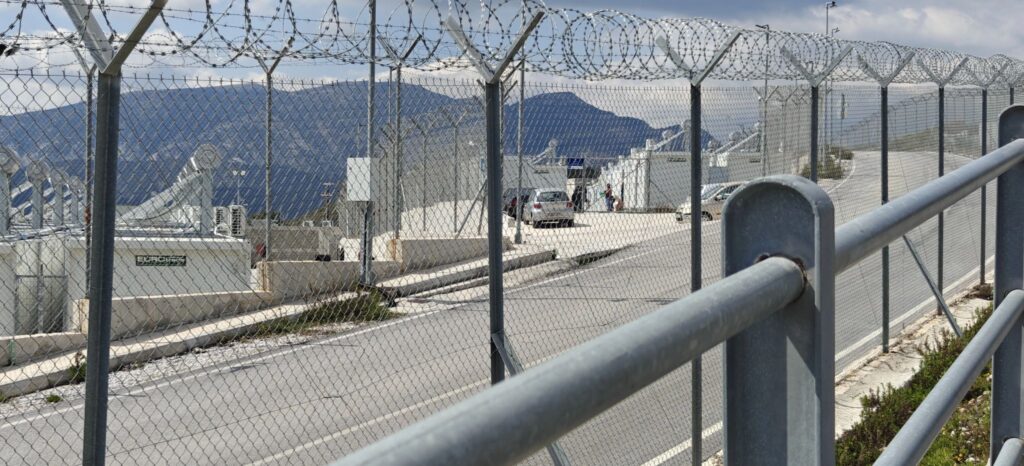
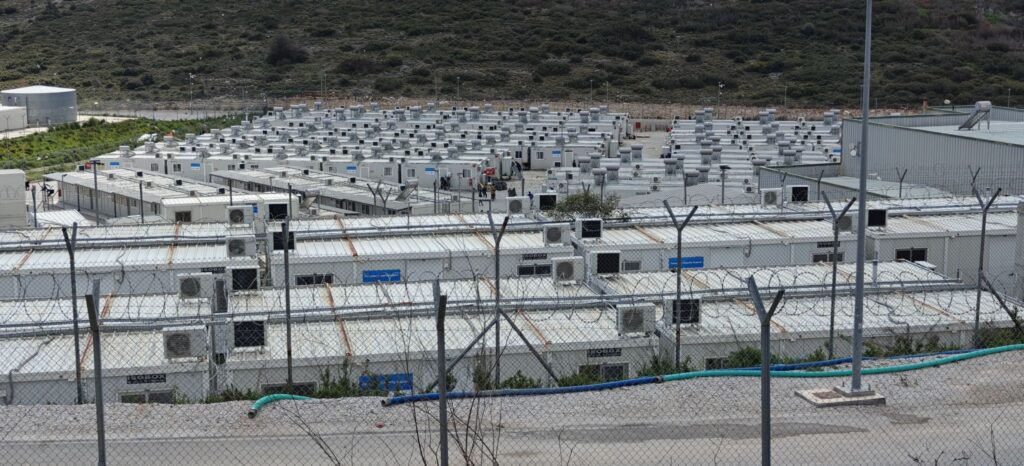
A strong storm is raging over Samos. The island is rougher than Lesbos, with fewer inhabitants. Yet, there is a growing number of people on their way to a (dream of a) future. A large camp, a 1.5-hour walk from the city, that truly looks like a prison. Especially for the many children, it is a distressing place. Garbage is everywhere, the containers where people live have no locks, the camp was built in a location with severe water issues, there is no lighting at the sanitation facilities, no proper washing facilities, and police violence. The latter is present in all camps, but out of fear, people rarely talk about it.
We are not allowed inside. There are few NGOs here, and the ones we visit do not have access. People are allowed to leave the camp, but that means long lines and strict controls.
The camp was originally located on a hill near the city. This caused much discontent among the local population, especially in regard to tourism. A few years ago, it was relocated. The new camp was initially intended for 2,400 people, but suddenly it was designated for 3,600, and it frequently holds even more. Despite these large numbers, few aid organizations are active here. They cannot enter the camp, and all organizations struggle with funding, making expansion difficult.
That help is needed is beyond question. We speak with a legal organization that supports people during and after their asylum procedures, as well as an organization that provides a much-needed escape from the camp’s atmosphere. A community center where people can learn English, where children can play, and where women have a space of their own. “People need a place to relax, to step away from that prison-like environment,” says Dalia from Samos Volunteers, who built Alfa Land right across from the camp. Cheerful, colorful, and even on this extremely windy day, a place where people come to feel human again.
The greatest unmet need is mental health care. The number of people who have been trafficked, raped, or otherwise tortured is high. On Lesbos, there is some attention to this, for example through BRF, but here, hardly any. This is due to the lack of attention from the Greek government and, as mentioned, the low number of NGOs.
Lianne and I feel deeply saddened. There is no other way to put it. Treating people like this—it simply makes no sense. The storm that has been raging across the island for days only adds to the heaviness.
But even now, it is the people who, against all odds, continue to do what is absolutely necessary, who share their plans, hopes, and despair with us, who persist with an inexhaustible drive to do what must be done—they set the example.
And I keep thinking about how to find funding for these organizations. Because it has to be done—to support these guardians of humanity while the world in which they operate grows ever darker. They simply won’t let it happen. And neither will we.