At the Edge of Humanity: What I Witnessed in Greece

Rob and colleagues,

Over the past two weeks, I was in Greece, visiting our partner organizations that offer the last glimpses of humanity in a world that, for people on the run, is no longer humane.

Because no, Rob, this is not about a single incident where something goes wrong. Human rights are being violated systematically. A sentence in a policy document stating that this should not happen does not mean that it does not happen. Because it does happen. And on a large scale.

I have seen a great deal of suffering in my life across this world. What makes this different is that I am a citizen of a country that supports this suffering. That considers it acceptable.

I would very much like to take you along on my next trip. We would talk to the boy who had to flee his country, who endured a hellish journey filled with horrific experiences, who crossed the sea. Upon arrival, the Greek coast guard tried to push the boat back into the sea (this happens on a very large scale; there is overwhelming evidence—could you address Greece about this?). The boy held up a baby who was also on the boat and said: Don’t do it! They did not, but they arrested him and claimed he was a smuggler. He is not. Thousands of people in Greece are imprisoned on charges of human smuggling when they are not smugglers at all (could you also address the Greek government about this?).

We would also try to speak with the people who, just the night before last, were taken from their beds in one of the camps on the islands by the police and arrested. Their application had been rejected for the second time. They can now be detained for two years, even though their legal term had not yet expired.

And we would visit the organizations working on mental health. Because 50% of the people who come there have suicidal thoughts. After experiencing terrible things, then not being welcomed, being placed in a filthy camp, and then waiting—there is a limit to what people can endure.

I could tire you with an essay about the legal, constitutional, and factual errors that dominate the debate on migration. About numbers that are incorrect, but above all about the ongoing lies used to justify inhumane measures.

I will not do that. I appeal to your humanity. Things are happening at the edges of Europe that cannot bear the light of day. Children arriving on the shores of Greece are sent back out to sea naked in rubber boats. Masked men push boats back or let them sink. With impunity.

Saying that human rights must be respected while holding no one accountable, dismissing kilometers of evidence—I cannot and do not want to understand it. Once, we were a country that held human rights in high regard, that stood up for them internationally. Now we are participating in a European contest to see who can create the harshest asylum policy.

Come with us sometime and listen.

Rob Jetten

samos

Storm on Samos

Maybe it’s a good thing that it never becomes normal—the things that simply shouldn’t be, that leave a knot in your stomach and sadness in your mind. Because they force us to search for solutions.

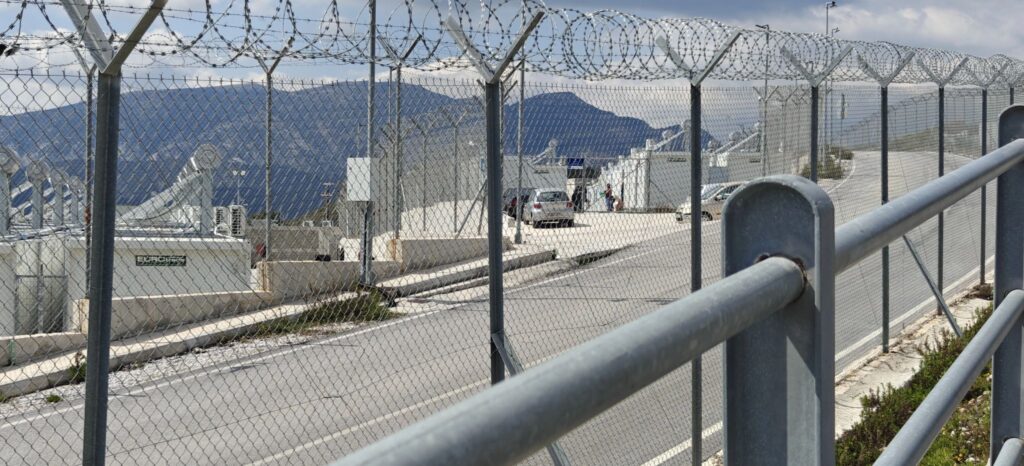
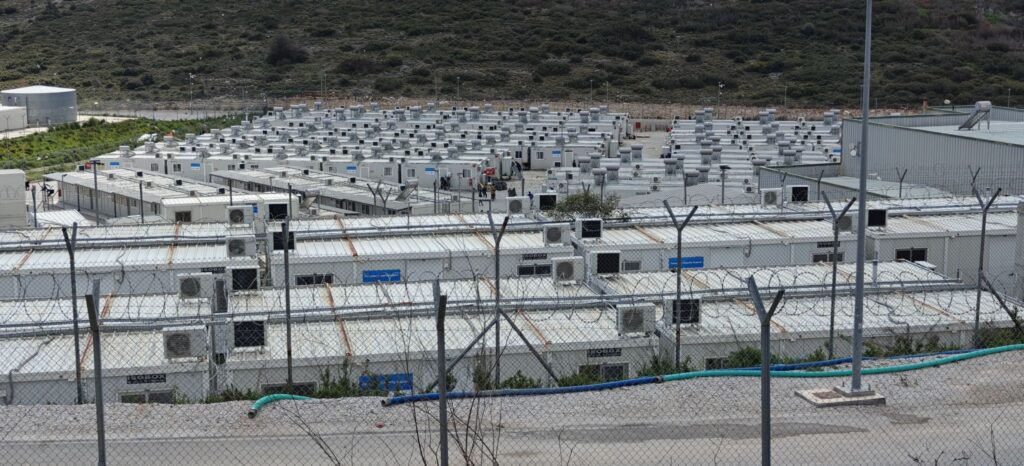
A strong storm is raging over Samos. The island is rougher than Lesbos, with fewer inhabitants. Yet, there is a growing number of people on their way to a (dream of a) future. A large camp, a 1.5-hour walk from the city, that truly looks like a prison. Especially for the many children, it is a distressing place. Garbage is everywhere, the containers where people live have no locks, the camp was built in a location with severe water issues, there is no lighting at the sanitation facilities, no proper washing facilities, and police violence. The latter is present in all camps, but out of fear, people rarely talk about it.

We are not allowed inside. There are few NGOs here, and the ones we visit do not have access. People are allowed to leave the camp, but that means long lines and strict controls.

The camp was originally located on a hill near the city. This caused much discontent among the local population, especially in regard to tourism. A few years ago, it was relocated. The new camp was initially intended for 2,400 people, but suddenly it was designated for 3,600, and it frequently holds even more. Despite these large numbers, few aid organizations are active here. They cannot enter the camp, and all organizations struggle with funding, making expansion difficult.

That help is needed is beyond question. We speak with a legal organization that supports people during and after their asylum procedures, as well as an organization that provides a much-needed escape from the camp’s atmosphere. A community center where people can learn English, where children can play, and where women have a space of their own. “People need a place to relax, to step away from that prison-like environment,” says Dalia from Samos Volunteers, who built Alfa Land right across from the camp. Cheerful, colorful, and even on this extremely windy day, a place where people come to feel human again.

The greatest unmet need is mental health care. The number of people who have been trafficked, raped, or otherwise tortured is high. On Lesbos, there is some attention to this, for example through BRF, but here, hardly any. This is due to the lack of attention from the Greek government and, as mentioned, the low number of NGOs.

Lianne and I feel deeply saddened. There is no other way to put it. Treating people like this—it simply makes no sense. The storm that has been raging across the island for days only adds to the heaviness.

But even now, it is the people who, against all odds, continue to do what is absolutely necessary, who share their plans, hopes, and despair with us, who persist with an inexhaustible drive to do what must be done—they set the example.

And I keep thinking about how to find funding for these organizations. Because it has to be done—to support these guardians of humanity while the world in which they operate grows ever darker. They simply won’t let it happen. And neither will we.
samos
samos
Nour

Nour’s Tears and the Reality of War

I was in the middle of writing a somewhat optimistic piece for LinkedIn when Nour walked in. The toughest guy in Mitilini and the camp—half Syrian, half Ukrainian, and a favorite among all the volunteers. He sat down next to me and burst into tears. He spoke about the violence now raging in Syria, where his family is, and about the kind of funerals being held in the camp to commemorate those who have died in this latest outbreak of violence. Like a little child, I comforted him—as much as one can, at least.

Mrs. Faber truly has no idea.

Nour Daher